About us

Who we are

A coral restoration program built on science, powered by community.

Our mission

Rescue. Research. Restore.

Reef Response’s mission is to stimulate coral reef ecosystem health through coral restoration, promote community involvement through citizen science, and ensure best practices through scientific research.

Our goals

  1. Increase abundance and diversity

    Grow the number and variety of reef-building corals across the U.S. Virgin Islands.

  2. Involve the community

    Expand community participation in coral reef conservation and research.

  3. Advance the science

    Collect scientific data that improves the efficacy of coral restoration practices.

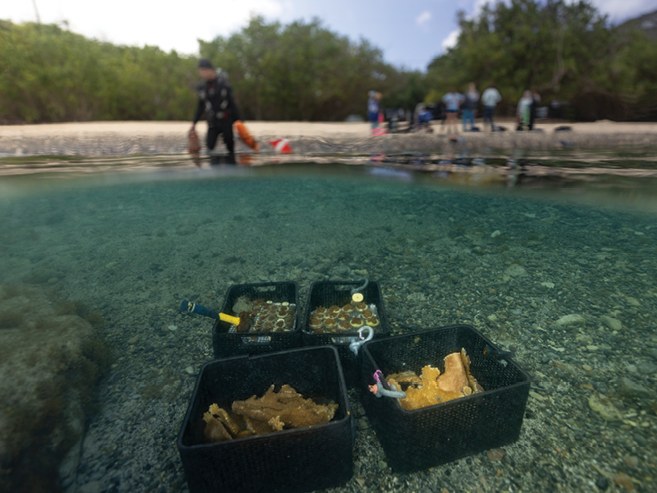
Crates of coral fragments held in shallow water at the shoreline, with the team working on the beach behind
Rescued corals held in shallow water at the shoreline before being outplanted to Hull Bay.
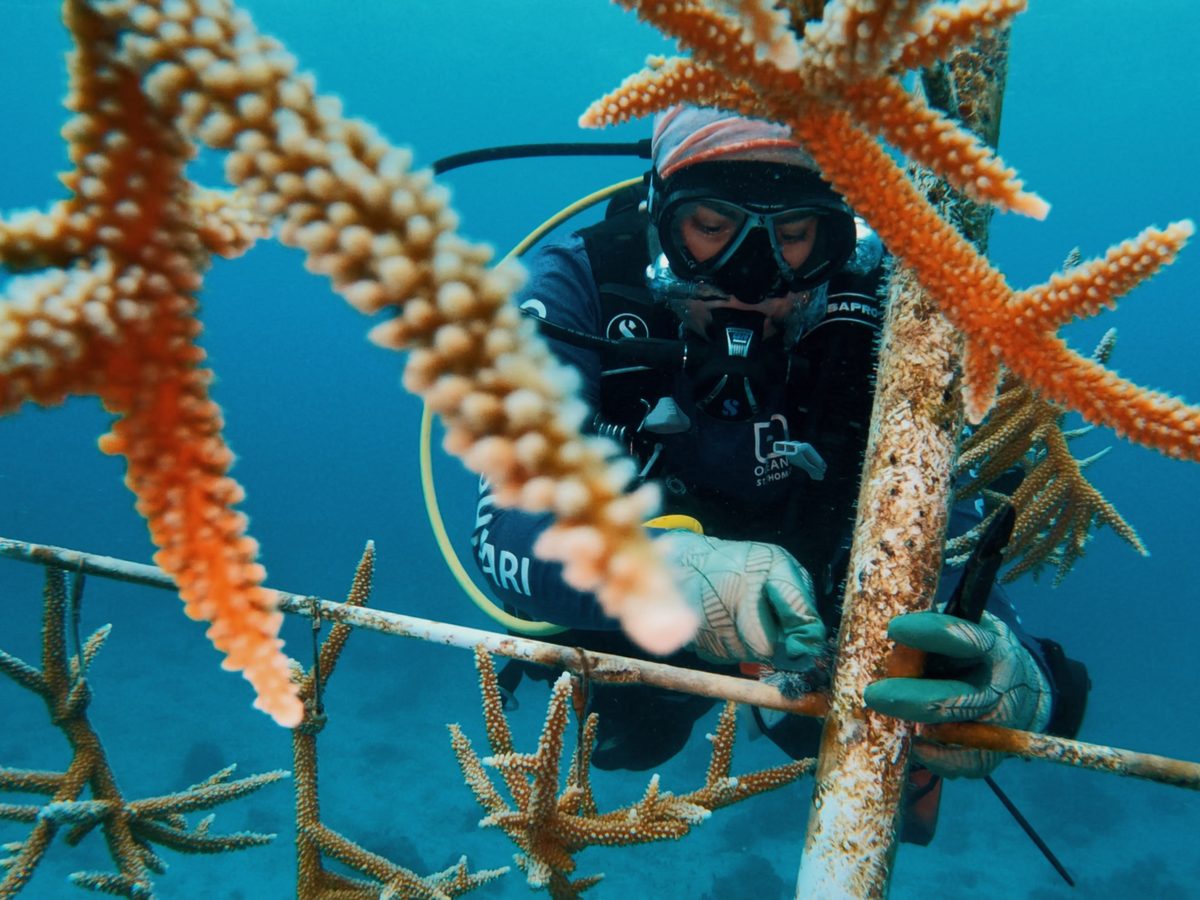
A diver tending staghorn coral growing on an in-water nursery tree
A volunteer diver cleaning a nursery tree, the work the citizen science program was built around.
Citizen science

Citizen scientists helped rebuild our reefs

After Hurricanes Irma and Maria wiped out most of our nursery corals in 2017, Reef Response co-founders Alex Gutting and Kristen Ewen built a citizen science program to help rebuild. Our first community dive, with Red Hook Divers in August 2018, brought together a crew made up entirely of USVI residents who contributed more than 200 person-hours.

Working alongside our scientific divers, citizen scientists cleaned nursery structures, monitored coral growth and health, and collected data that shaped how we restore reefs. Their work let us care for far more corals than our team could have managed alone.

Our in-water volunteer program is paused for now, and we’re working to bring it back. In the meantime, you can still add to the same monitoring effort by reporting what you see on your dives and snorkels.

Report what you see

Report signs of bleaching


Reef Response, along with our colleagues and collaborators, consistently monitors the health of coral reefs around St. Thomas. But we can’t do this all by ourselves.

If you notice anything unusual on your snorkel or dive, we would appreciate if you take a moment to fill out a coral health report survey. This is crucial to inform us of where disease mitigation is needed. In addition, this information will be referenced in scoping future restoration sites.

If you have an underwater camera, you can attach up to ten photos to your report. Pictures help us identify the species and what is affecting it before anyone gets back in the water.

Submit a coral health report

Seen bleaching, disease, or damage? Tell us where and what you saw.

Opens our Coral Health Reporting Form in a new tab, hosted on ArcGIS Survey123.

See the difference

Healthy vs. bleached


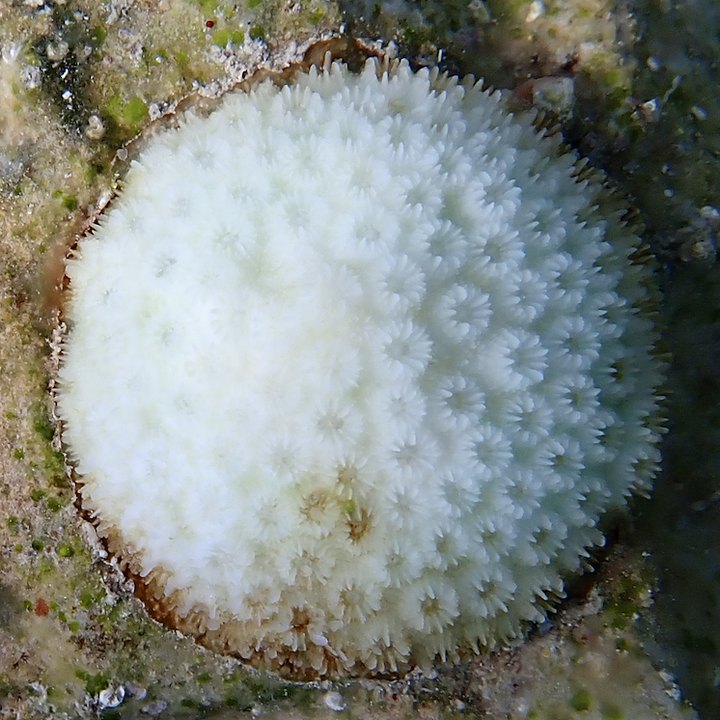
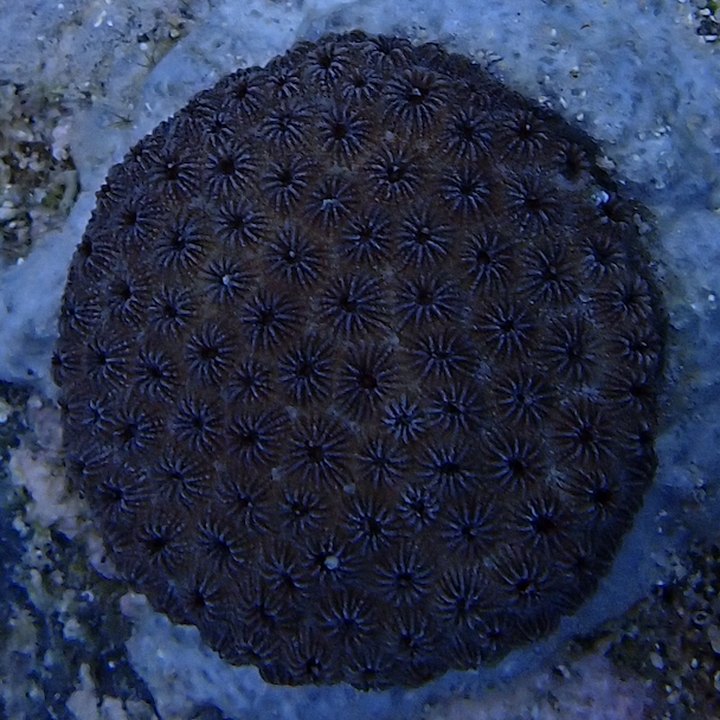
Drag the slider to see the same coral, a lobed star coral (Orbicella annularis), healthy and then after bleaching.

When the water gets too warm, corals expel the algae living in their tissue — the algae that give them their colour and most of their food. What’s left is a white, starving coral that can recover if temperatures drop, or die if they don’t. Lobed star coral is listed as endangered, and it’s a focus of the microfragmentation work in our land-based nursery.

The same lobed star coral colony after bleaching, its tissue turned almost completely white
A healthy lobed star coral colony (Orbicella annularis) on a cement puck, dark brown with its polyps clearly visible
Healthy Bleached
Field guide

Identifying sick corals


It takes years of training to diagnose coral health reliably, but recognizing a few warning signs and reporting them helps us target disease response and choose future restoration sites.

If you spot any of these on a dive or snorkel, note where you were and submit a coral health report.

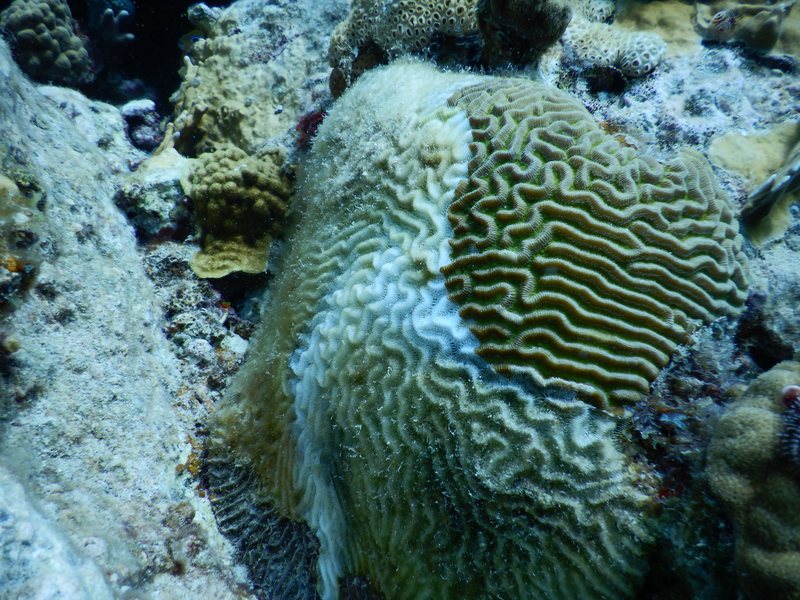
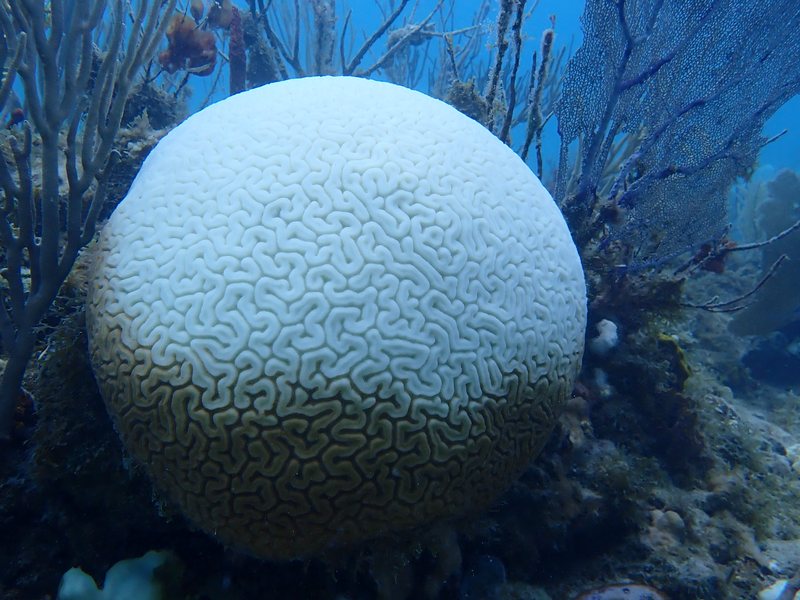
Symmetrical brain coral with a broad band of freshly exposed white skeleton from stony coral tissue loss disease
Symmetrical brain coral (Pseudodiploria strigosa)

Stony coral tissue loss disease

Look for bands or patches of bright white, freshly exposed skeleton right next to darker colored, healthy tissue, often advancing quickly across a colony. SCTLD reached St. Thomas in 2019 and hits brain, star, and pillar corals especially hard.

A bleached grooved brain coral, its surface turned stark white against a healthy reef
Grooved brain coral (Diploria labyrinthiformis), bleached

Bleaching

Bleached coral turns pale, white, or mottled, but the tissue is still alive — the polyps are intact and the skeleton shows through. It’s a stress response to high water temperatures, and corals can recover if conditions improve.

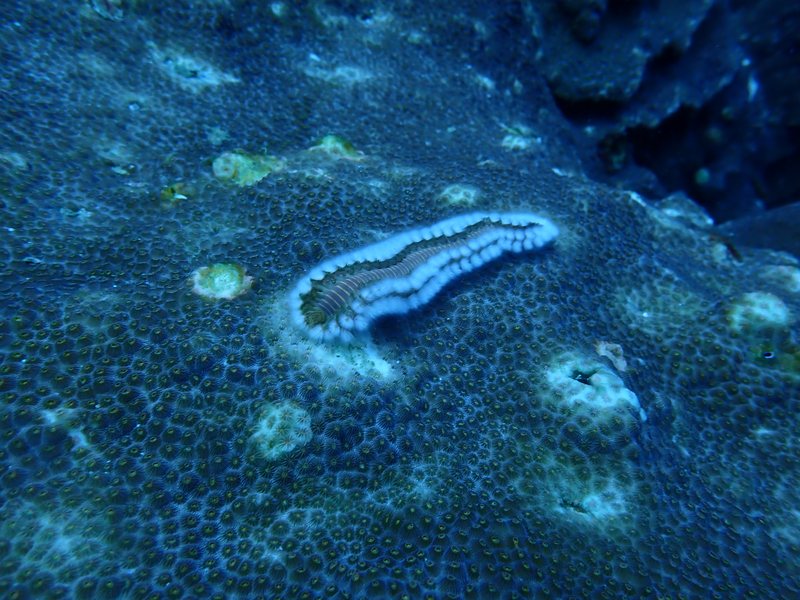
A bearded fireworm feeding on boulder star coral, leaving a pale scar behind it
A fireworm feeding on boulder star coral (Orbicella franksi)

Predation scars

Small, scattered white patches or bite marks are usually predation, not disease: fireworms, parrotfish, and coral snails all feed on coral tissue. Catch one in the act and the culprit is obvious; otherwise, these scars stay small and don’t spread as an advancing band.

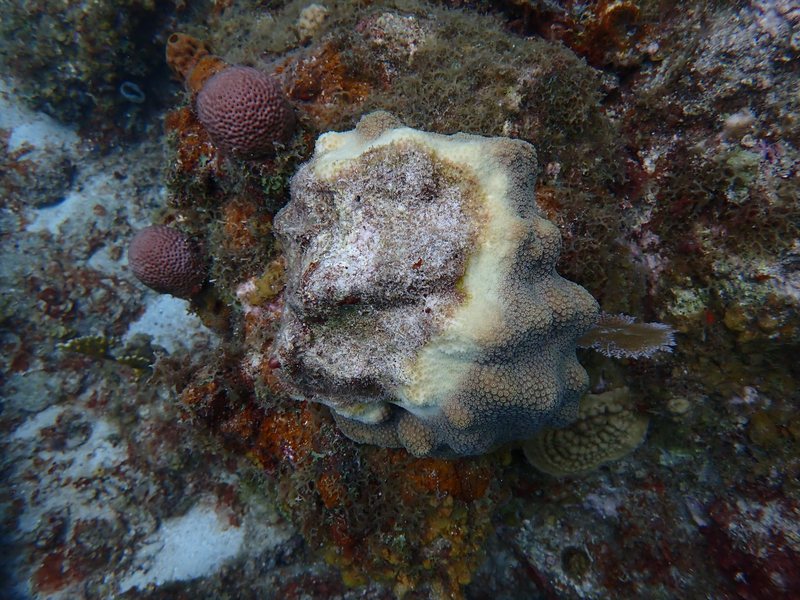
Mountainous star coral with a pale yellow band of diseased tissue and bare skeleton behind it
Mountainous star coral (Orbicella faveolata) with Caribbean yellow-band disease

Other diseases & overgrowth

A pale yellow blotch or band spreading slowly across a colony, leaving bare skeleton behind it, is Caribbean yellow-band disease — it hits star corals hardest and can take years to kill a colony. Watch too for black band, dark spots, white plague, and corals being overgrown by boring sponges, tunicates, or anemones.

For more conditions and 13 susceptible species, download the SCTLD & Coral Disease ID Cards.

Meet the team

The people behind the work


Scientists, divers, and students restoring reefs across the U.S. Virgin Islands.

Research and field leads

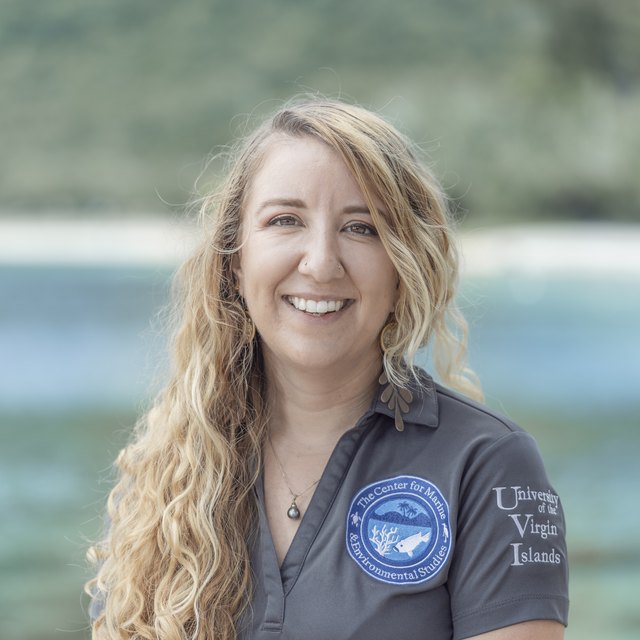
Dr. Marilyn Brandt

Dr. Marilyn Brandt

Reef Response Director · Research Professor, UVI

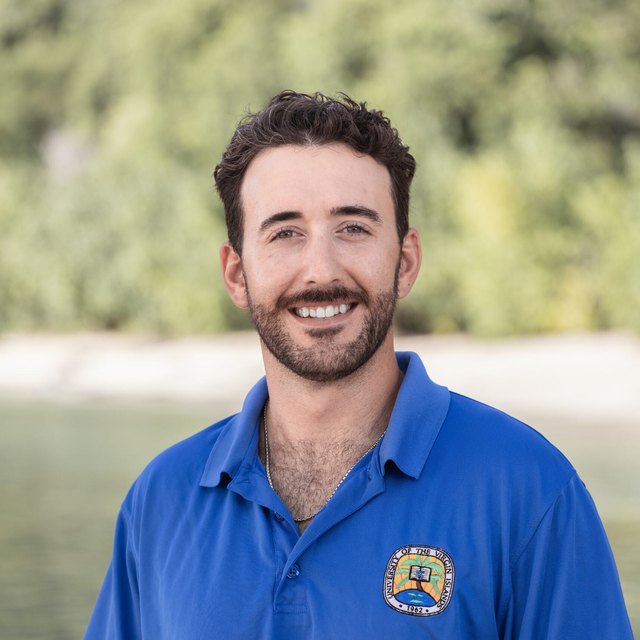
Davis Strobel

Davis Strobel

Coral Aquarist

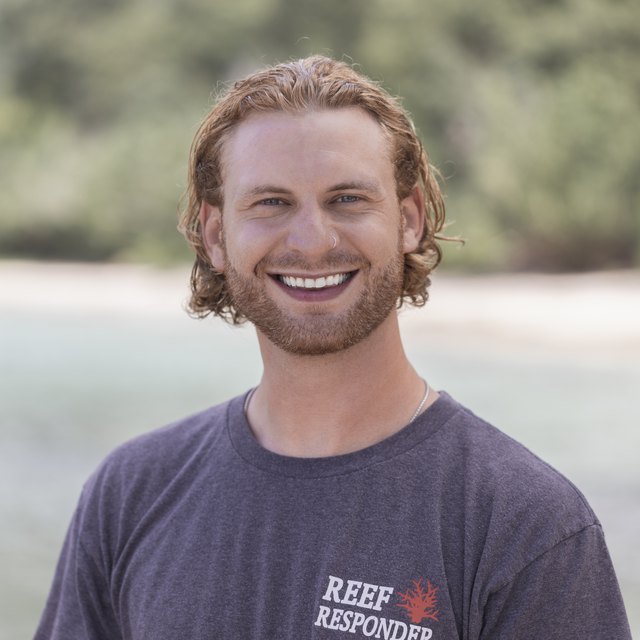
Brad Arrington

Brad Arrington

Coral Restoration Specialist

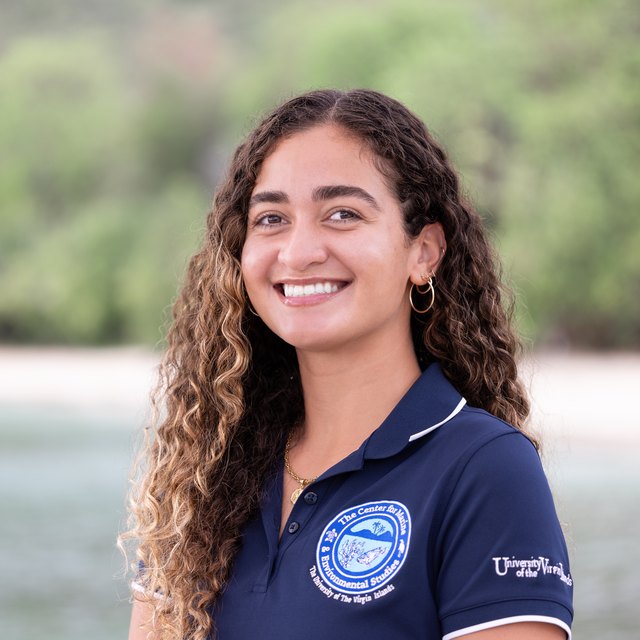
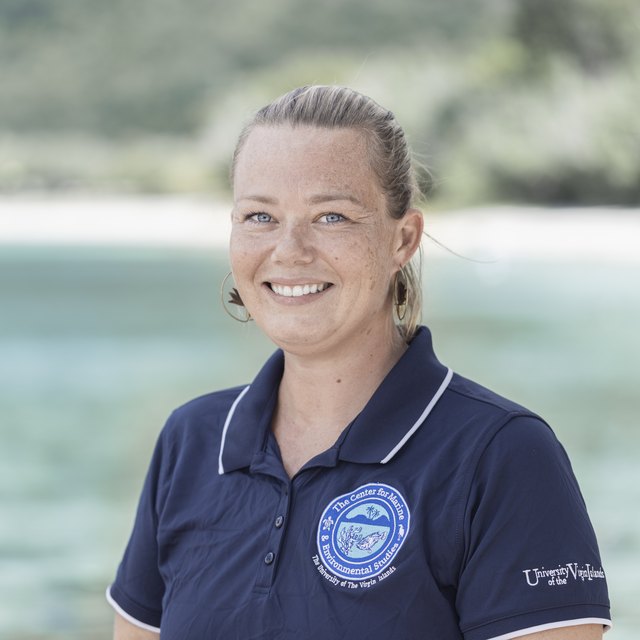
Chloé Camacho

Chloé Camacho

Education and Outreach Coordinator

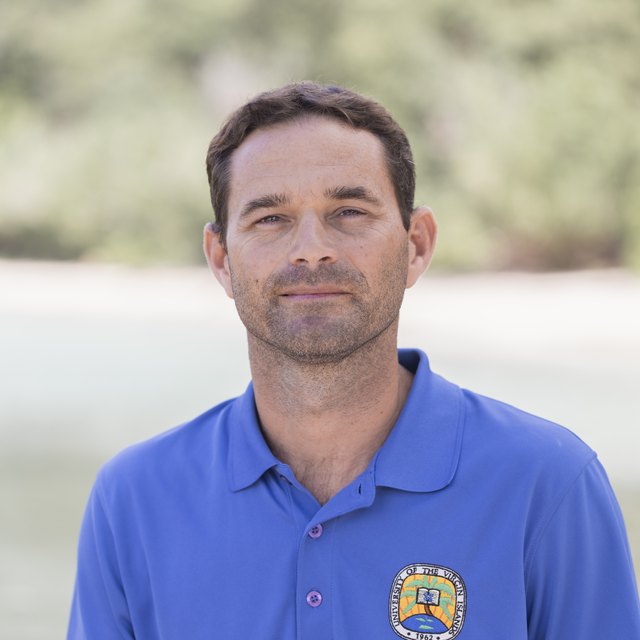
Jason Quetel

Jason Quetel

Marine Life Restoration Specialist

Sonora Meiling

Sonora Meiling

Marine Disease Specialist

Moriah Sevier

Moriah Sevier

Marine Disease Specialist

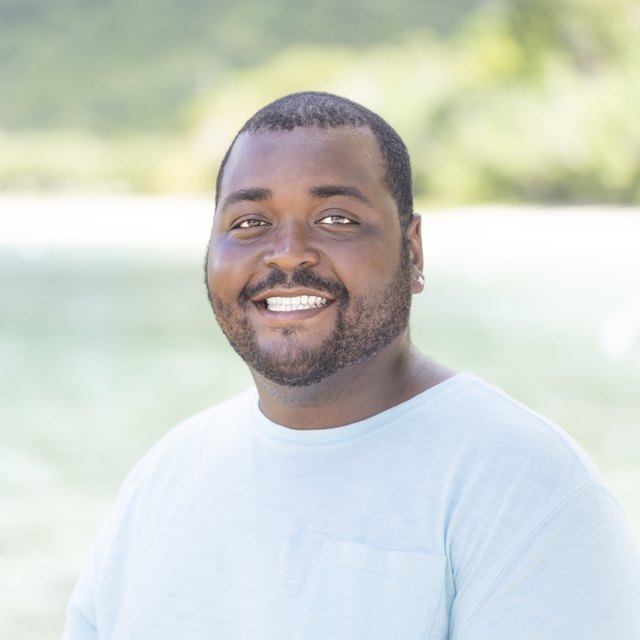
Samuel Gittens Jr.

Samuel Gittens Jr.

Disease Treatment Specialist

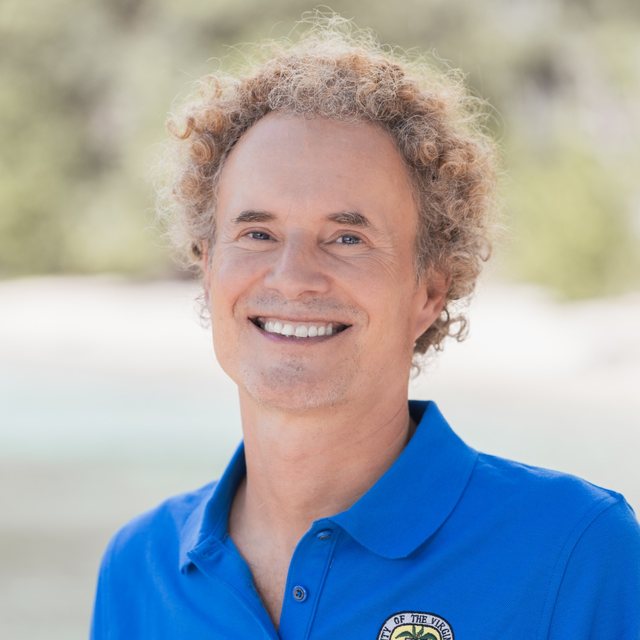
Dr. Larry Dew

Dr. Larry Dew

Reef Response Faculty · Donor Relations Specialist

Gillian Coleman

Gillian Coleman

Coral Reproduction Specialist

Avery Coble

Avery Coble

Acropora Monitoring Program Coordinator

Alumni

Alex Gutting

Co-founder

Alex co-founded Reef Response (formerly VI Reef Response) as a graduate intern under Dr. Marilyn Brandt at UVI. She and Kristen Ewen led efforts to rebuild the coral nursery at Flat Cay after it was destroyed in the 2017 hurricanes, and created Reef Response’s citizen science program. Alex is now the Coral Conservation Coordinator for The Nature Conservancy in St. Croix, working to strengthen collaborations between the two coral restoration programs.

Kristen Ewen

Co-founder

Kristen co-founded Reef Response (formerly VI Reef Response) as a graduate intern under Dr. Marilyn Brandt at UVI. She was integral in rebuilding the Flat Cay nursery following hurricanes Irma and Maria. She, along with Alex Gutting, developed the citizen science component of Reef Response, focusing on including recreational divers in coral nursery maintenance. Kristen is now a Biological Scientist Technician for the National Park Service in St. Croix, USVI.

Adam Glahn

Adam was a vital team member, building our temporary land-based coral nursery system and helping establish our in-water nursery at Great St. James. Adam currently works as a Biologist for the Environmental Protection Agency in Gulf Breeze, Florida.

Kathryn Cobleigh

Kathryn stepped into the Reef Response Coordinator role during the turbulence of the COVID-19 pandemic. Her efforts helped grow our organization and took Reef Response to new heights. She is currently pursuing a PhD in coral restoration at the University of Technology Sydney.

Rachel Ionata

Rachel brought her expertise in coral spawning and husbandry to the team. She helped us establish and standardize our husbandry protocols and grow our internship program, and coordinated several restoration projects and experiments. She returned to Nova Southeastern University to focus on coral sexual reproduction.

Natasha Bestrom

Natasha stepped into the role of Acropora Monitoring Coordinator during the exceptionally turbulent 2023–2025 global mass bleaching event. Her work quantifying elkhorn coral mass mortality and surviving populations will be pivotal to our long-term restoration goals. Natasha remains in the USVI with The Nature Conservancy in St. Croix.

Dan Mele

Dan’s husbandry expertise and gifted photography and videography combined to help propel Reef Response toward the established restoration organization we are today. He stepped back to follow his passion for conservation photography and filmmaking, and while still residing on St. Thomas, continues to stay involved when opportunities align.

Nicholas Durgadeen

Nicholas, a USVI native, has taken his talents to coordinate the St. Thomas East End Reserves (STEER), a marine protected area managed by the Department of Planning and Natural Resources, Division of Parks and Protected Areas. He is still completing his master’s thesis at UVI, and his research on coral bleaching continues with Reef Response.
Help protect our reefs

Report what you see on the water, partner with us, or support the work directly.