Rescue

Rescue

Corals that would otherwise be lost — collected, treated, and kept alive.

Where our corals come from

Saving corals that would be lost


Every coral in our care arrived one of three ways: broken loose on the reef, rescued ahead of disease, or rehabilitated after it.

Rescue is the first step in everything else we do. A fragment snapped off by a storm or an anchor has little chance on the seafloor; in a nursery it becomes brood stock, and eventually dozens of corals back on the reef.

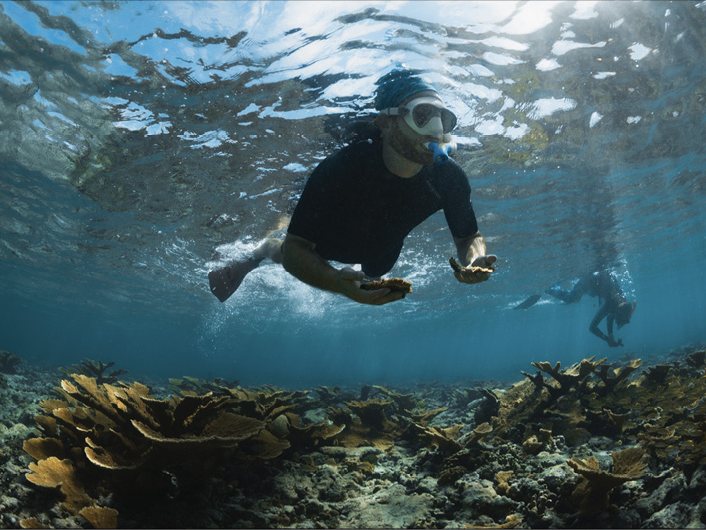
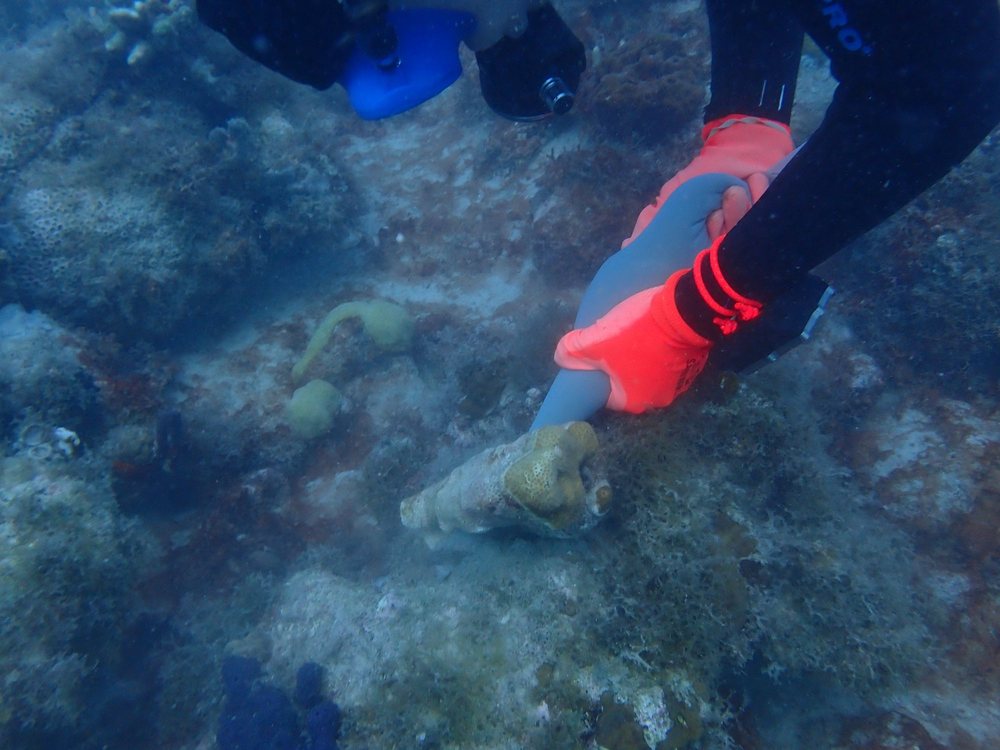
A snorkeler collecting loose coral fragments by hand above a shallow elkhorn coral reef
Collecting loose fragments by hand above a shallow elkhorn reef. Left on the sand, they would not survive.
About our coral

Fragments of opportunity


Our branching corals are primarily acquired as “fragments of opportunity.”

This means we collect unattached fragments created by actions that are both natural (like storms) and human-induced (like improper anchoring or boat groundings). We salvage these fragments and place them in our in-water nursery.

Mounding corals are often acquired as small portions of colonies still attached to the reef. These corals require more care, and so they are brought into and maintained in our land-based nursery. Our final source of corals includes those that have been taken off the reef in an effort to prevent them from becoming diseased, or to rehabilitate them after suffering from disease.

Damage response

When an anchor comes down


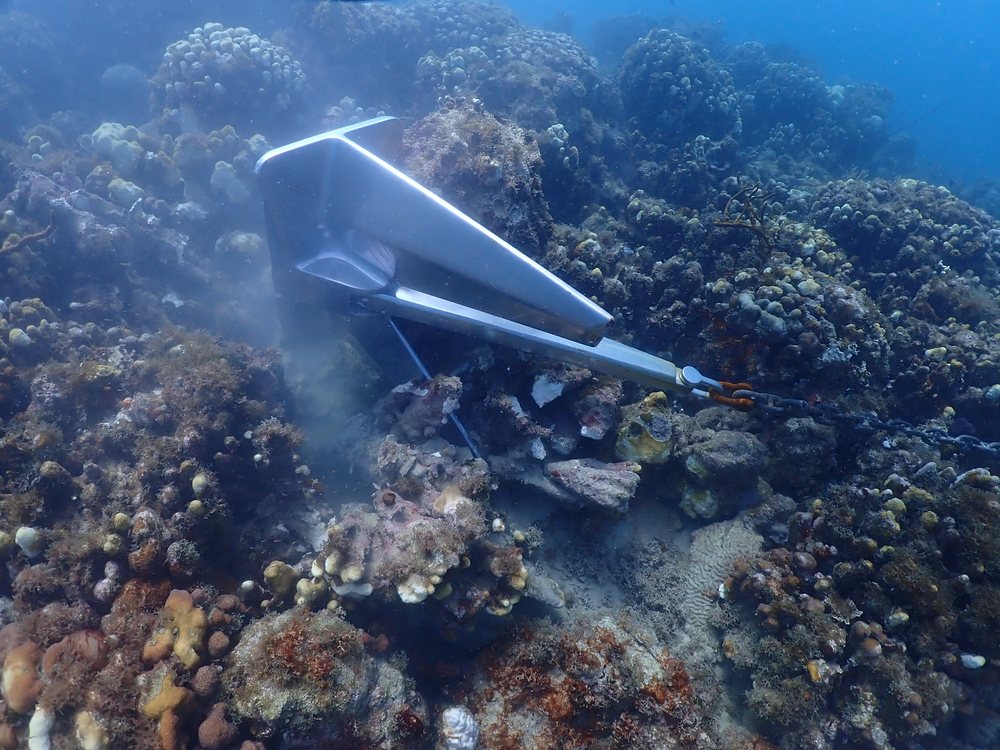
A dragging anchor or a grounded boat can undo decades of reef growth in minutes. When it happens, corals that are still alive can often be saved, if someone gets to them quickly.

Anchors and chains break colonies loose, crush others, and leave rubble that keeps rolling with the swell, grinding away at whatever it lands on. The corals that survive the first impact are frequently the ones lost afterwards, simply because nothing holds them in place.

We respond by returning those corals to the reef. Dislodged colonies and large fragments are recovered, moved to stable substrate where needed, and reattached, or restabilized, so they can go on growing where they came from. Corals too damaged to leave on the reef come into the nursery instead, and go back out once they have recovered.

Damage like this is often found by the people who use these reefs rather than by us. If you see a fresh anchor scar, overturned colonies, or a grounding, tell us what you saw and where.

The gene bank

Keeping genetics safe on land


Reef Response maintains a genetic repository, sometimes called a gene bank, of critically endangered species.

Stony coral tissue loss disease reached St. Thomas in 2019 and has all but erased pillar coral from these waters. Where a reef is threatened, we bring colonies into the land-based nursery ahead of the disease and rehabilitate corals that have already been affected.

These healthy adult colonies are not brood stock for microfragmentation. They are kept healthy to preserve their unique genetics, so the species still has a future here even if the wild populations do not recover. The bank currently holds 71 fragments of pillar coral alone.

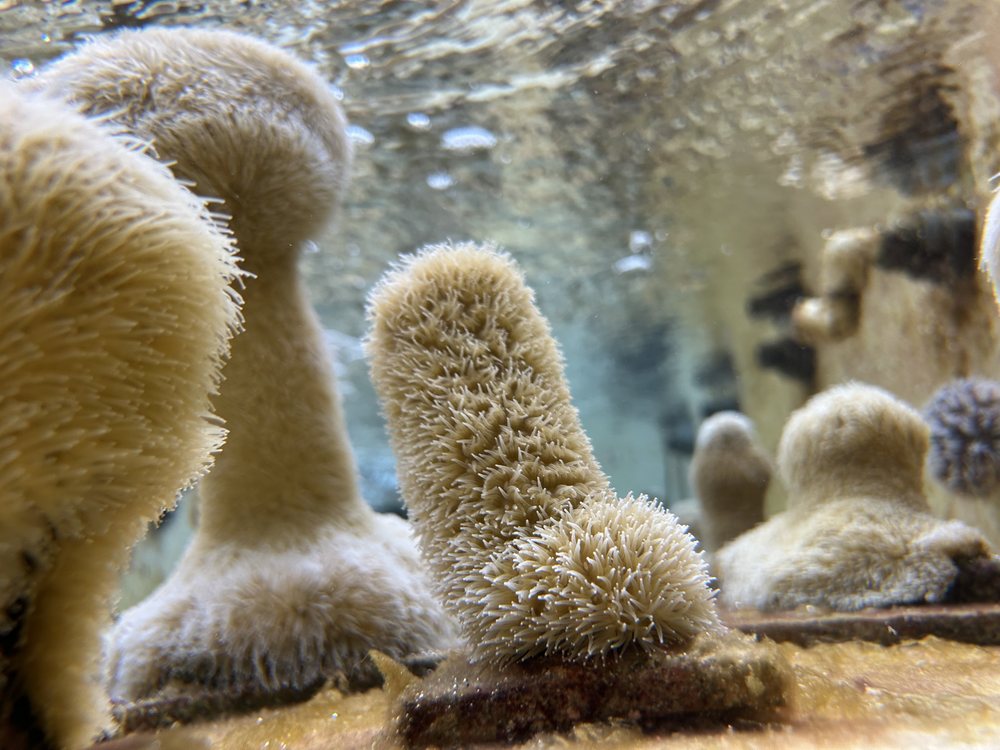
Pillar coral fragments with their polyps extended, growing in a land-based nursery tank
Pillar coral in the land-based gene bank, polyps out. Each fragment carries a genotype held in trust for the reef.
Disease treatment

Treating corals on the reef


Not every coral has to be collected. Where a colony can be saved where it stands, our divers treat it in place.

Stony coral tissue loss disease spreads across a colony and between colonies, so treatment is a race: find the affected corals, treat the lesions, and come back to check whether the disease has been halted. It is slow, repetitive work, and it has been running continuously since 2021.

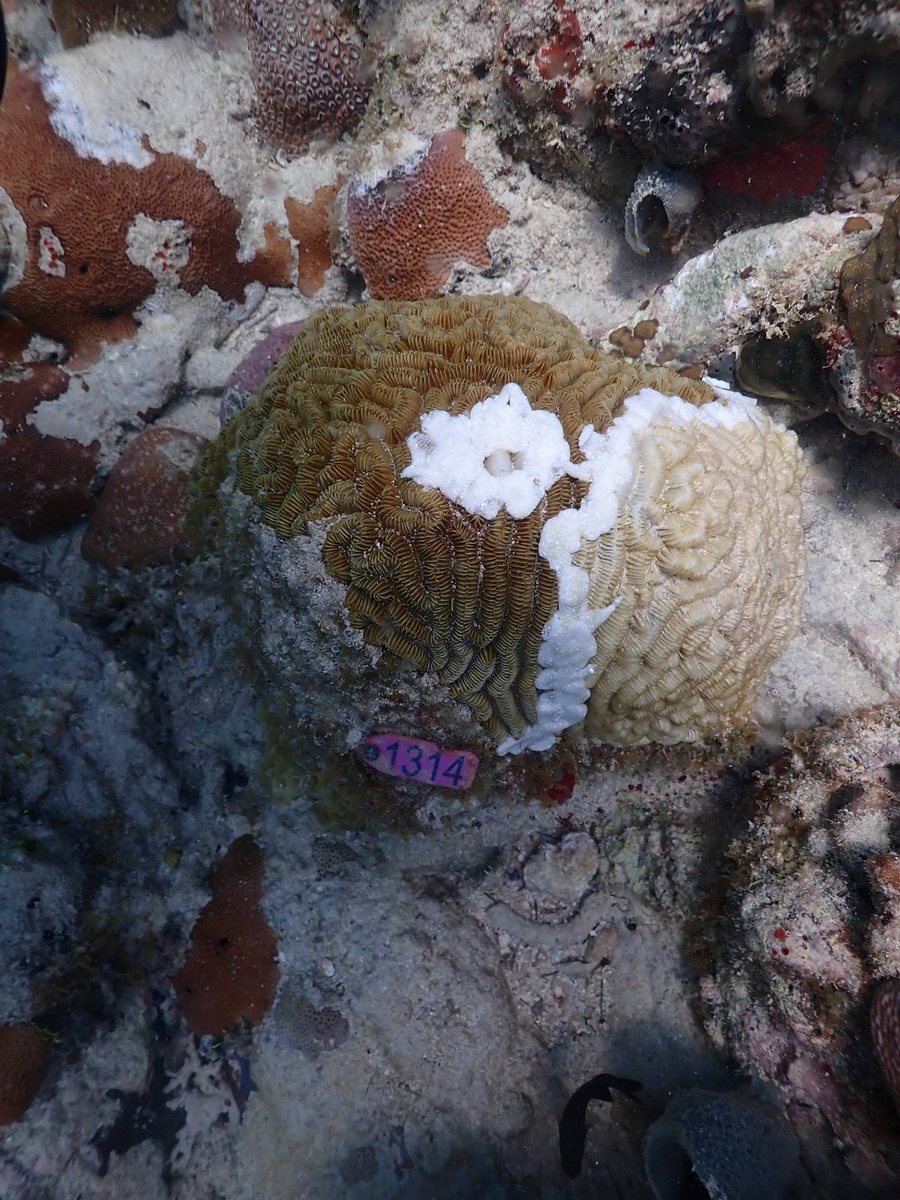
Treated colonies are tagged, so we can return to each one and record what happened to it — the only way to know whether a treatment held.

A maze coral with white treatment paste applied along the disease margin, and a numbered tag set beside it on the reef
A maze coral (Meandrina meandrites) treated for stony coral tissue loss disease and tagged for fate tracking.
~8,000

corals treated for disease

2021

treating continuously since October

71

pillar coral fragments held in the gene bank

The species we work with

More than twenty corals


Reef Response works with over 20 coral species. The nine below are the ones we handle most, chosen for the jobs they do on a reef and the pressures they are under.

The branching acroporids — staghorn and elkhorn — build the complex structure that shelters reef fish, and both were among the first corals listed under the Endangered Species Act. The mounding and brain corals grow slowly but add the bulk and longevity that hold a reef together; most are highly susceptible to stony coral tissue loss disease, so our land-based nursery doubles as a genetic reservoir for them. One species is here for a different reason: mustard hill coral is resilient to both bleaching and disease, and we are testing whether planting it alongside more vulnerable corals helps them survive.

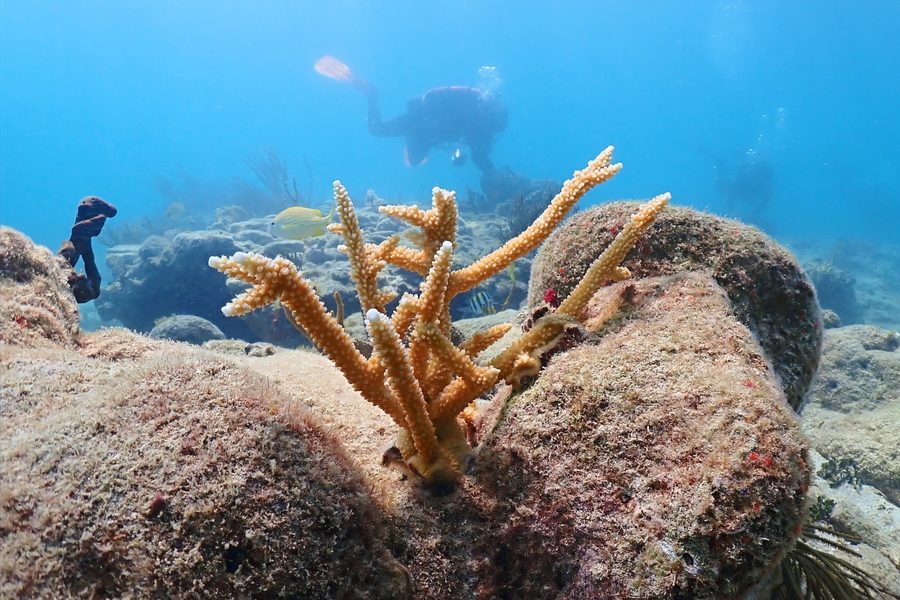
A staghorn coral colony growing on the reef with a diver in the background

Acropora cervicornis

Staghorn Coral

ESA listedIn-water nurseryLand-based nursery

A branching coral that once dominated Caribbean reefs. Populations across the Caribbean have significantly declined since the 1980s from disease outbreaks and the continual increase of sea surface temperatures. This species was one of the first corals listed under the Endangered Species Act and is a major focus of restoration efforts.
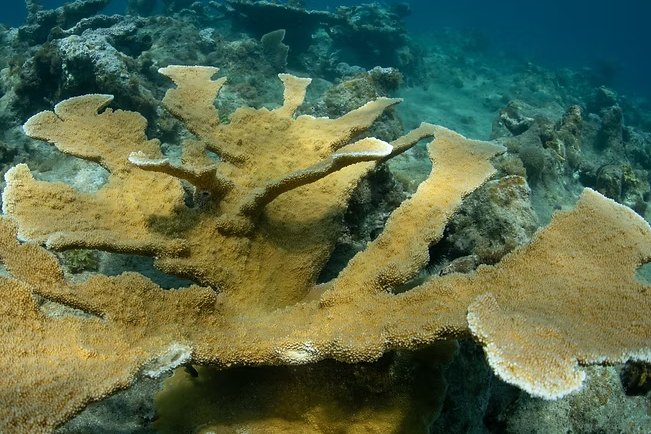
An elkhorn coral colony with broad, flattened branches spreading across the reef

Acropora palmata

Elkhorn Coral

ESA listedIn-water nurseryLand-based nursery

A quintessential Caribbean branching coral and an ecologically important species. This “ecosystem engineer” forms the basis of shallow coral reefs — its large branches create complex reef structure that provides essential habitat for reef fishes. Like staghorn coral, elkhorn populations have drastically decreased since the 1980s, and it was among the first corals listed under the Endangered Species Act.

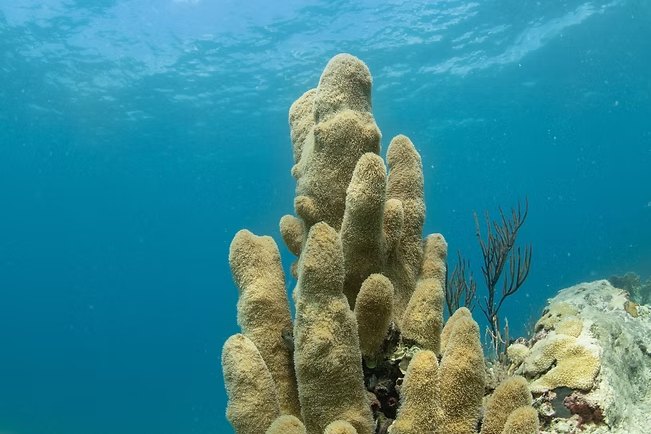
A pillar coral colony, its columns rising from the reef toward the surface

Dendrogyra cylindrus

Pillar Coral

ESA listedSCTLD susceptibleLand-based nursery

Named for its unique pillar-like structure. It can be regionally rare, but was fairly abundant in the U.S. Virgin Islands. Unfortunately, this species is highly susceptible to the devastating Stony Coral Tissue Loss Disease (SCTLD), first reported in St. Thomas in 2019. Since then, pillar coral populations have nearly vanished around the USVI. Saving pillar coral from disease is a major focus of our land-based nursery operations, in order to preserve the remaining genetic diversity of this species.

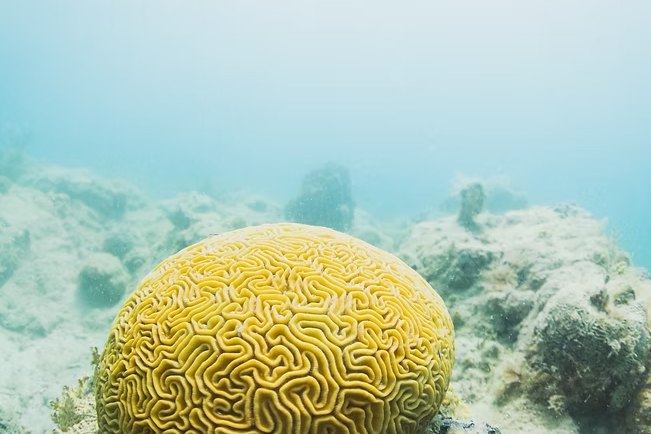
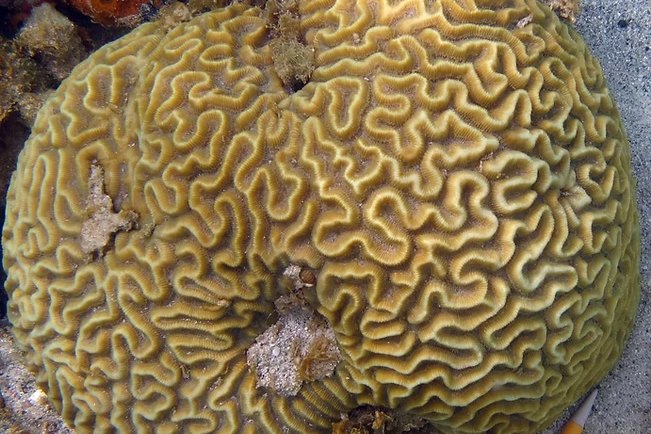
A yellow grooved brain coral, its surface cut by deep winding valleys

Diploria labyrinthiformis

Grooved Brain Coral

SCTLD susceptibleLand-based nursery

A large, bouldering stony coral endemic to the Caribbean, and one of the many brain coral species susceptible to Stony Coral Tissue Loss Disease. Genotypes are housed in our land-based nursery to preserve remaining genetic diversity. Colonies in our nursery were collected from SCTLD-threatened reefs and rehabilitated in our water tables.

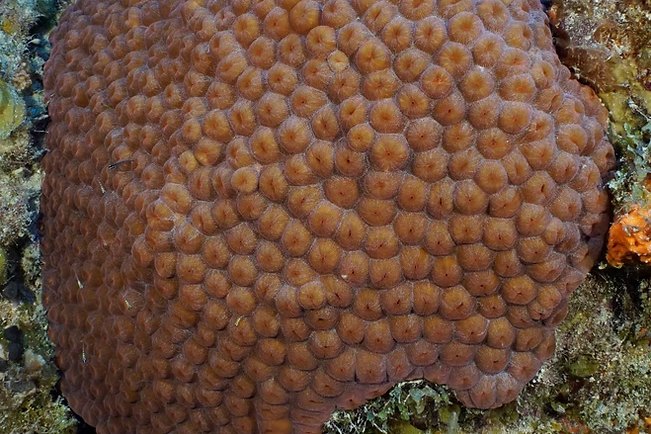
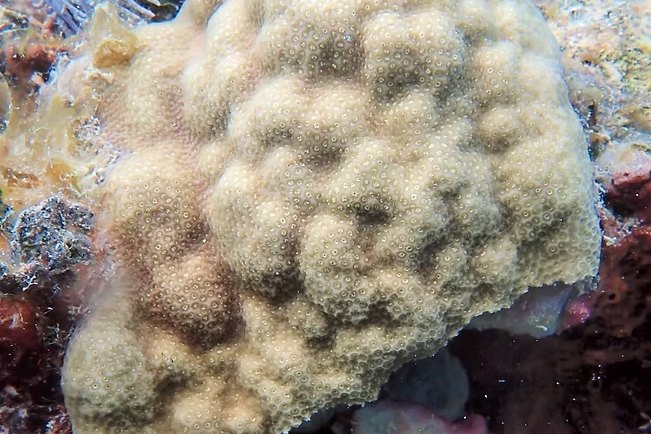
A great star coral colony showing its distinctive large, fleshy polyps

Montastraea cavernosa

Great Star Coral

SCTLD susceptibleLand-based nursery

A stony coral found across the Caribbean, notable for its large polyps and color variations. Typically a mounding species, it provides important reef structure. Like many other species we focus on, it is susceptible to Stony Coral Tissue Loss Disease. Colonies in our land-based nursery were rehabilitated following SCTLD transmission experiments conducted at the University of the Virgin Islands.

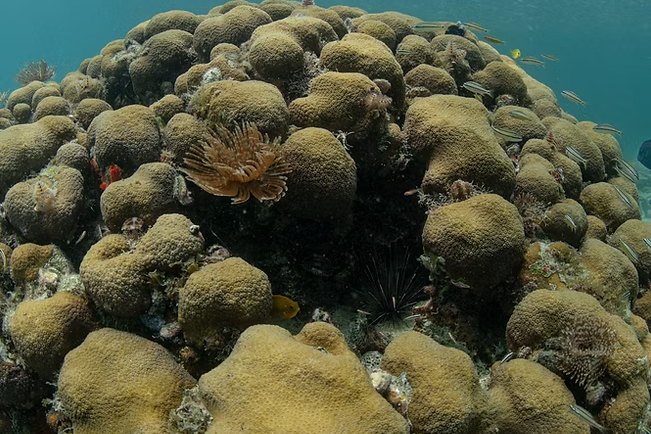
A lobed star coral colony formed of many rounded lobes

Orbicella annularis

Lobed Star Coral

ESA listedSCTLD susceptibleIn-water nurseryLand-based nursery

A massive bouldering coral that grows so that a single colony has multiple lobe structures, and one of the most important reef-forming corals in the Caribbean. It is listed as endangered due to significant loss attributed to recent mass bleaching events and the emergence of SCTLD. We grow lobed star coral in both our in-water and land-based nurseries, and it is a major focus of our microfragmentation program.

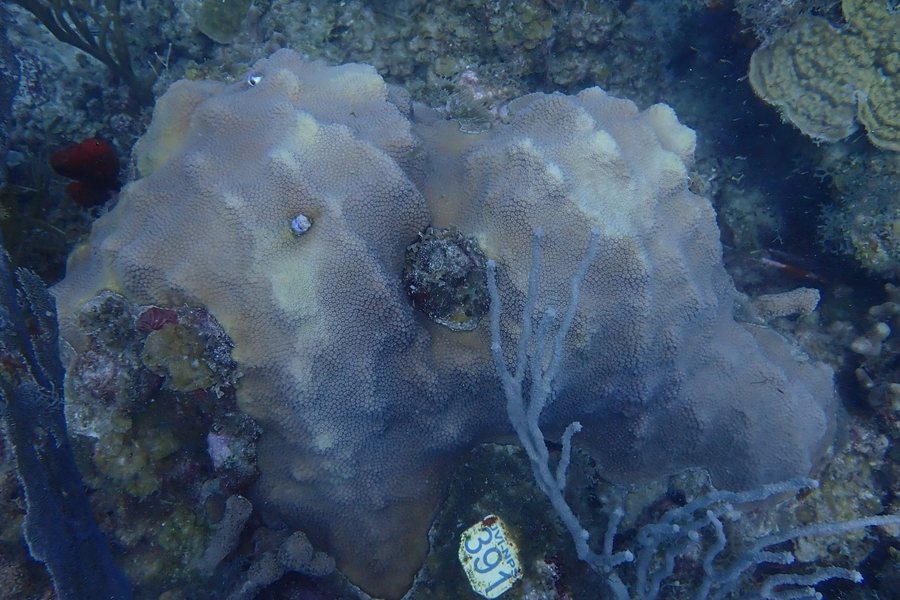
A tagged mountainous star coral colony on the reef, its surface a pattern of raised mounds

Orbicella faveolata

Mountainous Star Coral

ESA listedSCTLD susceptibleIn-water nurseryLand-based nursery

A massive reef-builder that raises tall mounds and ridges as it grows, forming some of the largest and oldest colonies on Caribbean reefs. Like its relative the lobed star coral, it has suffered heavily from back-to-back bleaching events and from SCTLD, and it is listed under the Endangered Species Act. We grow it in both nurseries and microfragment it for outplanting.

A mustard hill coral encrusting the reef in pale yellow

Porites astreoides

Mustard Hill Coral

Outplanting trials

A “weedy” Caribbean coral characterized by high abundance, quick growth, and high fecundity. This species is resilient to bleaching and to diseases like SCTLD, however it does not contribute greatly to reef structure due to its small size. We are testing how outplanting this species alongside other, more threatened species may facilitate their growth through positive species associations.

A symmetrical brain coral with its maze-like ridges and valleys

Pseudodiploria strigosa

Symmetrical Brain Coral

SCTLD susceptibleLand-based nursery

A common bouldering stony coral found across the Caribbean, and an important reef-building species because it is typically found in high abundance. Similar to the other brain corals, it is susceptible to Stony Coral Tissue Loss Disease. Colonies in our land-based nursery were collected from SCTLD-threatened reefs or rehabilitated following disease transmission experiments in our water tables.

Help us keep them alive

Tank time, coral food, nutrients and disease treatments all cost money.