Bringing new life to the reefs of the U.S. Virgin Islands through
hands-on coral restoration, community outreach and education, and science-based solutions.
Reef Response is the University of the Virgin Islands’ coral restoration
program, dedicated to protecting and rebuilding the vibrant coral reefs of the U.S. Virgin
Islands.
Our team works to increase coral abundance and biodiversity while engaging and empowering
the local community to take part in restoring the health of our oceans.
Our mission is to bring new life to our reefs through hands-on coral restoration, inspire
stewardship through education and citizen science, and lead with science-based solutions
that ensure our reefs thrive for generations to come.
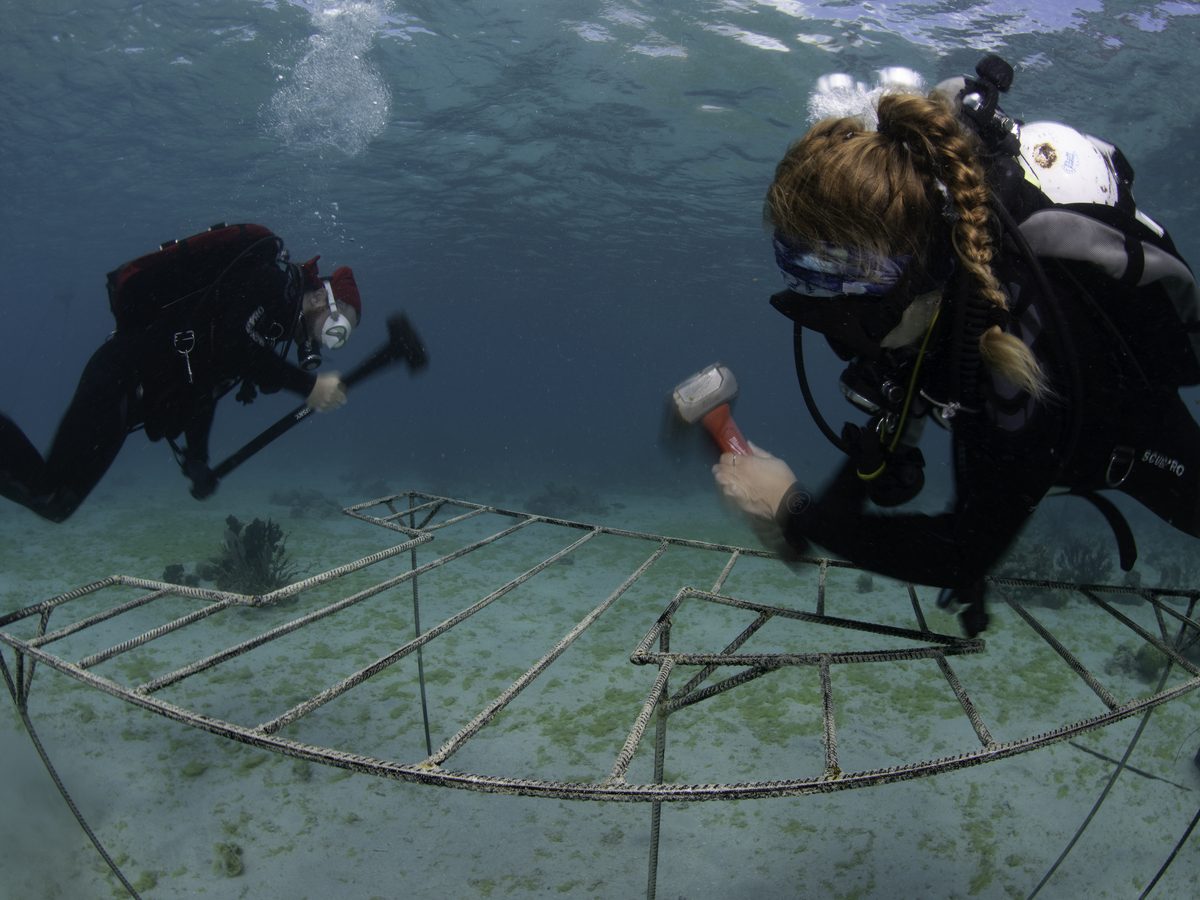
Divers installing a nursery structure on the seafloor, where rescued corals grow until they are ready for the reef.
Watch
Meet Reef Response
A short introduction to the program: who we are, and what restoring a
reef actually looks like.
What is restoration
Coral restoration
Coral restoration works to rebuild the abundance, diversity, and resilience of
reef-building corals, through methods that grow and nurture corals in both land-based
and in-water nurseries.
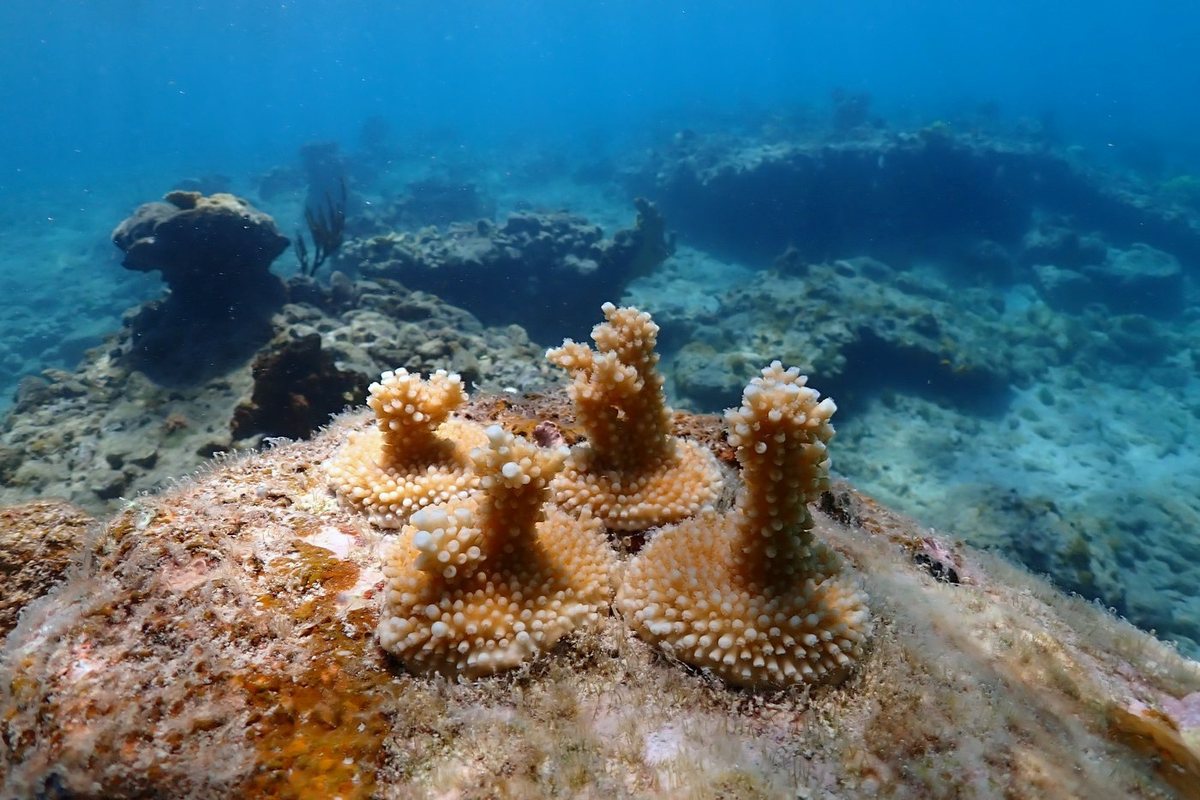
At Reef Response, we focus on “opportunity corals” — fragments that have
naturally broken off the reef and would otherwise die. These corals are carefully collected,
grown, and propagated in our nurseries before being transplanted back onto the reef, where
they continue to grow and restore reef structure and health.
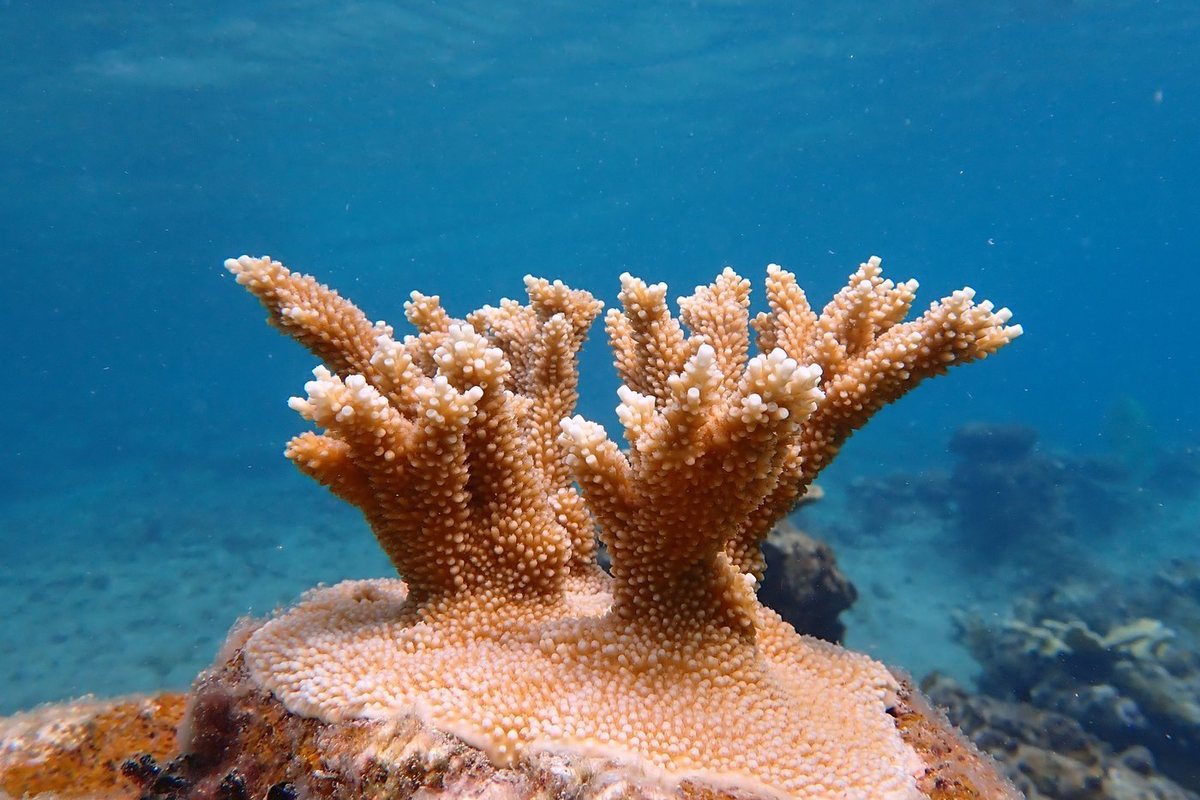
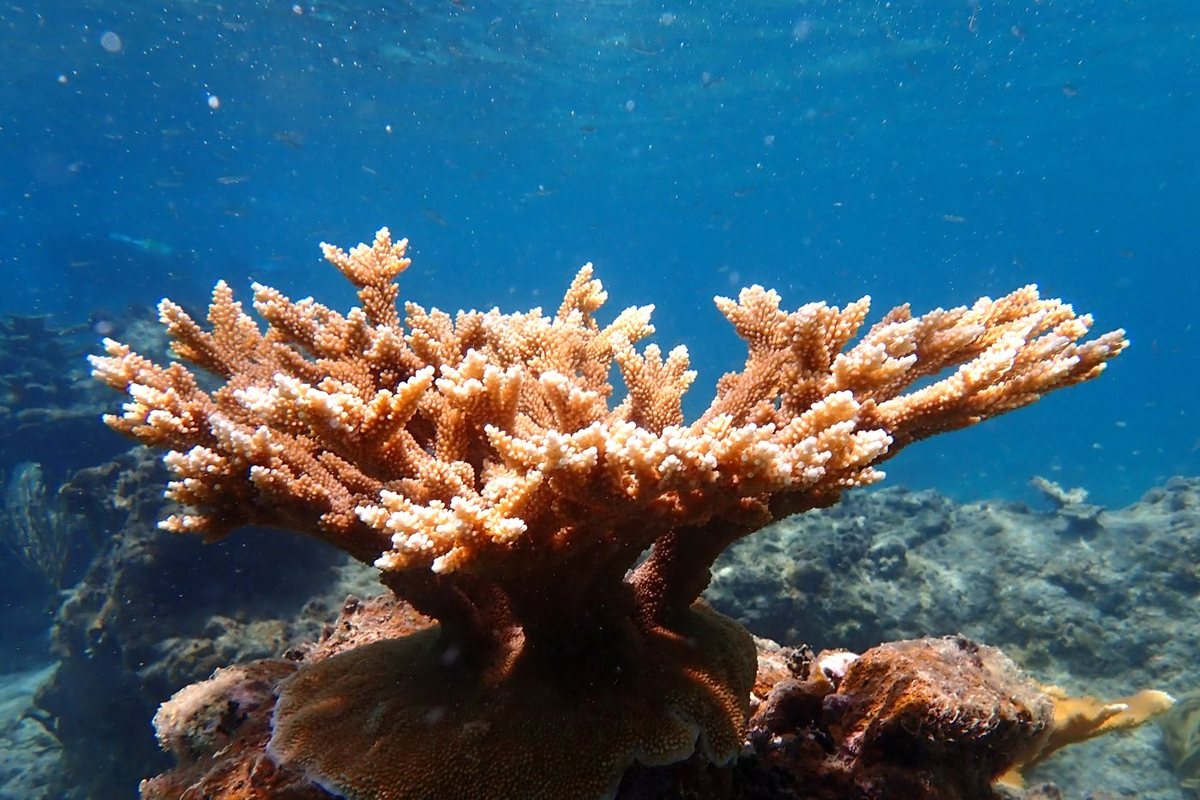
This is a single outplanted colony of fused staghorn
(Acropora prolifera), photographed on the same reef from 2022 to 2025. Drag the
photo or the slider to move through time.
Feb 2022Jun 2023Jun 2025
Photographed at the same site each year. The frames are cropped to hold the colony
in one place, so what changes between them is the coral.
What is involved
Key elements of coral restoration
Successful coral restoration programs share several key elements. Ours runs on
all five, year-round.
Nursery maintenance
Structures that hold the growing corals must be cleaned regularly to avoid overgrowth of
algae, sponges, tunicates, barnacles, and other organisms. Sick corals must be removed or
treated to prevent the spread of disease in the nursery.
Nursery monitoring
Coral fragments in both in-water and land-based nurseries are monitored for growth,
mortality, and health indicators, including disease, predation, and bleaching. This tells
us which coral species and genotypes are the best growers and survivors.
Outplanting
Once nursery corals reach an appropriate size, they are “out-planted” onto
coral reefs in need of restoration: divers on SCUBA attaching the fragments to the
reef using cement or underwater epoxy.
Outplanted coral monitoring
Outplanted corals are monitored regularly to track growth, mortality, and health
indicators. We use this information to inform our decisions for future outplanting.
Community outreach
Community awareness and involvement is an essential part of coral restoration. Reef
Response involves community members through our citizen science program, and raises
awareness through presentations and public events.
See our outreach →
<1%
of the seafloor is coral reef — yet it shelters more than a quarter of all marine life
1⁄2
of all fisheries species depend on reefs for at least one stage of life
97%
of wave energy can be absorbed by healthy hard corals, shielding our shorelines
$76M
of USVI economic activity is protected from storm-related flooding by coral reefs
$36B
generated globally each year by reef-related tourism
Storm-flooding figure: Storlazzi et al. 2019.
Reef Response and the Virgin Islands
Why our reefs matter
The U.S. Virgin Islands’ economy, well-being, and culture are deeply
intertwined with the health of our coral reef ecosystems.
Tourism and fisheries, the two main pillars of the local economy, depend on
thriving reefs that support abundant marine life and vibrant underwater landscapes. Reefs
also serve as natural barriers, protecting our shorelines from hurricanes, tropical storms,
and coastal flooding. Beyond their economic and ecological importance, coral reefs are woven
into the cultural fabric of the U.S. Virgin Islands, shaping traditions, livelihoods, and
our connection to the sea.
Fish communities
Coral reefs represent some of the most diverse ecosystems in the world. Although they
account for less than 1% of the seafloor, coral reefs harbor more than a quarter of all
marine life. Local fisheries depend on reef structure to provide homes for commercially
important species. Roughly half of all fisheries species depend on coral reefs for
at least one segment of their life cycle.
Storm protection
Coral reefs are nature’s first line of defense against the sea, protecting
coastlines from wave action, erosion, and flooding, especially during powerful
storms. Hard corals can dissipate and absorb up to 97% of wave energy. By causing waves to
break offshore, reefs help safeguard coastal communities and ecosystems.
Tourism
The beauty and biodiversity of coral reefs make them one of the world’s most
valuable natural attractions, supporting everything from diving and snorkeling to beach
recreation, fresh local seafood, and calm waters for boating. Globally, reef-related
tourism is estimated to generate $36 billion each year.
Our story
The history of Reef Response
From a handful of coral trees off Flat Cay, through two Category 5
hurricanes, to four nurseries across two islands.
Original St. Thomas coral nurseries
The Nature Conservancy establishes the first coral nurseries on St. Thomas, with anchors for up to 20 coral “trees” at Flat Cay and West Cay, plus a demonstration tree at Coral World.
UVI students join the work
Students from UVI’s Master of Marine and Environmental Science program intern with TNC personnel, assisting with nursery maintenance and outplanting. Between 2014 and 2017, TNC and MMES outplant more than 12,100 Acropora cervicornis colonies around St. Thomas.
The nurseries transfer to UVI
TNC personnel reductions lead to the transfer of the St. Thomas nurseries to the University of the Virgin Islands. The nurseries are consolidated to 10 trees across two main sites, with plans for UVI to host one of TNC’s coral restoration “Innovation Centers.”
Hurricanes Irma and Maria
Two Category 5 hurricanes strike the territory within two weeks of each other, devastating the nurseries along with the reefs around them.
Counting what survived
MMES interns Alex Gutting and Kristen Ewen assess the damage. Flat Cay: two A. cervicornis trees and 20 live corals. West Cay: seven trees and 13 live corals, consolidated onto a single tree. Overall, 33 of roughly 1,200 corals survived — about 2%.
Rebuilding the in-water nurseries
Recovery and expansion begin at Flat Cay and West Cay, led by the effort to rebuild what the storms took.
The first Reef Response dive
The first VI Reef Response community dive runs with Red Hook Divers: 100% USVI residents, contributing more than 200 person-hours. The citizen science program is born.
A land-based nursery, and microfragmentation
The land-based nursery is established with funding from the Spruance Foundation and an anonymous donor, originally targeting A. palmata, Orbicella spp. and Dendrogyra. Microfragmentation begins the same year: corals cut onto cement pucks of 2–5 cm, and onto “coral cones” and “coral domes.” The species list expands as stony coral tissue loss disease reaches St. Thomas.
The first artificial reef in the USVI
Working with the USVI Department of Planning and Natural Resources, we complete
the territory’s first artificial reef — 187 marine-grade concrete modules,
23,500 lbs in all, arranged in the shape of a Taíno double-spiral petroglyph.
See the project →
Corals in the Classroom
We launch Corals in the Classroom, a four-lesson coral reef curriculum for high school
students, at Charlotte Amalie High School.
About the program →
Four nurseries, two islands
Reef Response runs in-water nurseries at Flat Cay, Great St. James, Lovango Cay and UVI, alongside the land-based nursery. At Lovango Cay, the Rescue to Reef project divides the site into rescue, research and restore zones. The restored zone alone now holds 1,500+ corals across 15+ species, including four listed under the Endangered Species Act.
Our reefs need a response
Whether you report what you see on the water, partner with us, or support the work directly,
you help make the next outplanting possible.